Virtual Staging Cost in 2026: Full Pricing Breakdown
Discover the real virtual staging cost in 2026. Compare per-image pricing across cheap AI tools, mid-tier platforms, and traditional human stagers.
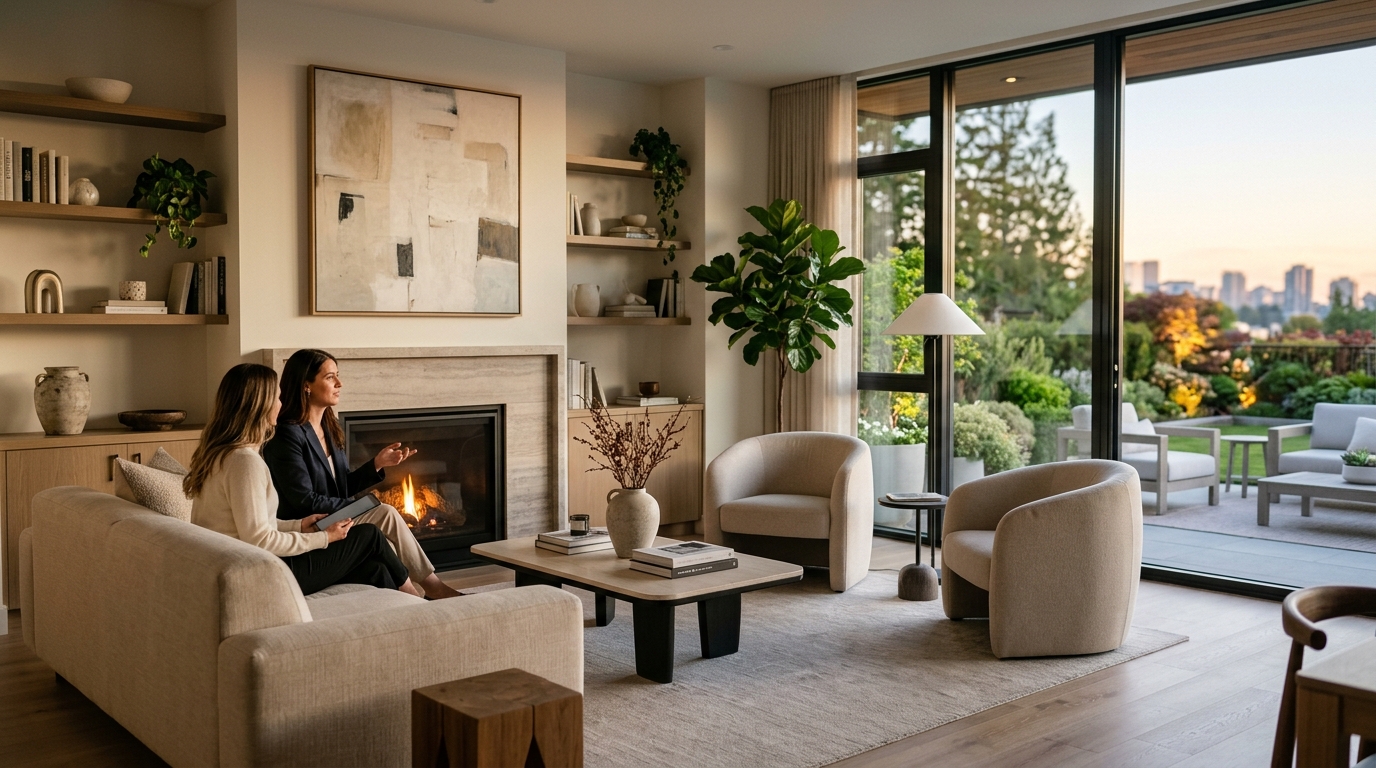
TL;DR: If you are wondering how much does virtual staging cost, expect to pay anywhere from $1 per image for basic AI generators to $150 per image for bespoke human design. The sweet spot for most brokerages is mid-tier AI virtual staging, which costs between $15 and $39 per image while delivering photorealistic results in minutes rather than days. Avoiding hidden fees for revisions and commercial usage licenses is critical to protecting your listing margins.
According to recent data from the National Association of Realtors (NAR), 81% of buyers' agents report that staging a home makes it easier for a buyer to visualize the property as a future home. Yet, spending $2,500 on physical furniture rental for a mid-market property destroys your gross commission income before the listing even hits the MLS. Virtual staging has completely cannibalized the traditional staging market for vacant properties, but the vendor landscape has fractured. Brokerages are now forced to navigate a chaotic pricing matrix spanning offshore human designers, credit-based AI rendering platforms, and completely automated one-click generators. Understanding the exact breakdown of virtual staging pricing is the only way to scale your marketing without sacrificing visual quality or blowing your marketing budget.
The Spectrum of Virtual Staging Pricing in 2026
The days of paying a flat rate to a single offshore vendor for every listing are over. The introduction of advanced generative models has split the market into three distinct tiers: cheap automated tools, mid-tier specialized AI platforms, and traditional human-led boutique agencies. When evaluating the virtual staging price per image, you have to factor in turnaround time, aesthetic control, and the technical accuracy of the perspective and lighting.
Real estate marketing operates on tight deadlines. If a vendor takes 48 hours to return photos, that is two days your listing isn't syndicating to Zillow or Rightmove. Fast turnaround isn't a luxury; it's a financial necessity. The pricing you choose dictates not just the quality of the image, but the velocity of your listing pipeline.
- Tier 1 (Automated AI): $1 to $5 per image. Instant generation, low control, high risk of artifacts.
- Tier 2 (Pro AI Platforms): $15 to $39 per image. Minutes to hours turnaround, high control, photorealistic lighting.
- Tier 3 (Human Agencies): $60 to $150 per image. 24 to 48 hours turnaround, bespoke furniture selection, variable consistency.
Cheap AI Tools: The $1 to $5 Range
At the bottom of the pricing hierarchy are budget AI virtual staging applications. These platforms typically charge a monthly subscription of $10 to $30, which breaks down to an ai virtual staging cost of roughly $1 to $5 per image depending on your volume. Tools in this category often rely on generic, un-tuned open-source image generation models.
The appeal here is strictly financial. For high-volume rental agencies moving C-class apartments, spending $3 to fill an empty living room makes sense. However, these tools frequently struggle with structural preservation. You might find that the AI has subtly altered the window frames, erased a baseboard, or generated a sofa with five legs. The lighting often lacks accurate shadow casting, resulting in furniture that appears to "float" above the floor.
While the virtual staging price per image is unbeatable, the hidden cost is your time. Agents using cheap AI tools often spend hours regenerating images, hoping the algorithm randomly produces a usable result. This tier is best reserved for properties where visual perfection is secondary to simply showing scale.
- Requires high volume to justify subscription costs.
- Significant risk of architectural hallucinations (altering the actual property).
- Low resolution outputs that may require separate upscaling.
- Limited ability to dictate specific interior design styles.
Mid-Tier AI Platforms: The $15 to $39 Sweet Spot
For the vast majority of residential sales, the mid-tier represents the optimal balance of speed, quality, and cost. Platforms in this bracket, such as FramePilot AI, utilize proprietary models specifically trained on real estate interiors. Expect to pay between $15 and $39 per image, often structured through scalable credit packages or flexible agency plans.
The core advantage of mid-tier AI virtual staging is workflow integration. Unlike budget tools, these platforms allow practitioners to define room types, select specific architectural styles (e.g., Mid-Century Modern, Coastal, Farmhouse), and maintain strict structural fidelity. The algorithms map the geometry of the room, ensuring correct perspective, scale, and natural shadow generation from existing light sources.
When you use FramePilot AI, for instance, you are not just blindly prompting an image generator. You are leveraging an engine that understands interior design principles. This tier eliminates the 48-hour wait times associated with human agencies while delivering quality that passes the "Zillow scroll test" with ease. For agents listing properties in the $400k to $1.5M range, this is the definitive staging solution.
- Photorealistic results generated in minutes.
- Complete preservation of walls, windows, and structural elements.
- Ability to seamlessly swap styles if the seller changes their mind.
- Cost-effective enough to stage every room, not just the primary living spaces.
Traditional Human Virtual Staging: $60 to $150 Per Image
Before AI disrupted the industry, virtual staging required human 3D artists manually placing CAD furniture models into 2D photographs using software like 3ds Max or Blender. Firms like BoxBrownie popularized this model, but boutique agencies still command premium virtual staging pricing ranging from $60 to $150 per image.
The primary use case for human-led staging in 2026 is ultra-luxury real estate or highly specific architectural visualizations. If you are selling a $15 million penthouse in Manhattan and the developer insists on staging the room with a specific $40,000 Minotti sofa, human intervention is necessary. 3D artists can custom-build specific furniture assets to match exact specifications.
However, for 95% of listings, this approach is financially inefficient and operationally sluggish. Human staging requires a rigid feedback loop. If the designer misinterprets your brief, you are waiting another 24 hours for a revision. The ai virtual staging cost paradigm has made traditional human staging a niche service rather than a default marketing step.
- Necessary for exact furniture replication (ultra-luxury market).
- Slowest turnaround time (typically 24 to 48 hours).
- Highly dependent on the skill level of the assigned overseas contractor.
- Difficult to scale during busy spring market months.
Physical Staging vs Virtual Staging: The Macro Cost Comparison
To truly contextualize how much does virtual staging cost, it must be measured against the physical alternative. Physical staging requires inventory, logistics, movers, and insurance. A standard 3-month rental contract for a 2,000-square-foot home rarely falls below $2,500, and often exceeds $4,000 in major metropolitan markets.
Virtual staging eliminates the logistical friction entirely. You are capturing the exact same marketing benefit—helping buyers visualize the space—at a fraction of the cost. The table below illustrates the stark contrast in pricing, turnaround times, and quality control across all staging methodologies available in 2026.
| Staging Method | Average Cost | Turnaround Time | Best Use Case | Revisions |
|---|---|---|---|---|
| Physical Staging | $2,500 - $5,000+ (Total) | 1 - 2 Weeks | Ultra-luxury, in-person open houses | Extremely difficult/costly |
| Human Virtual Staging (e.g., BoxBrownie) | $60 - $150 (Per Image) | 24 - 48 Hours | Custom architectural visualization | Usually costs extra |
| Mid-Tier Pro AI (e.g., FramePilot AI) | $15 - $39 (Per Image) | Under 10 Minutes | Standard to luxury residential listings | Instant, often included |
| Basic AI Generators | $1 - $5 (Per Image) | Instant | High-volume cheap rentals | Endless regeneration required |
Beware the Hidden Costs of Virtual Staging
When auditing your marketing spend, the sticker price per image rarely tells the whole story. Many traditional and low-tier virtual staging providers obscure their true costs through restrictive terms of service and nickel-and-dime revision policies. You must read the fine print before committing your brokerage to a vendor.
The most common hidden cost is the revision fee. Human staging agencies frequently charge $10 to $25 for simple changes, such as swapping a rug color or removing a piece of generated wall art. If the designer misses the mark on a four-room package, your expected $300 invoice can quickly balloon to $450. Furthermore, some platforms restrict the commercial usage rights of the generated images, requiring you to pay an extended license fee to use the staged photos in print advertising or on billboards.
To protect your margins, look for platforms that offer transparent, credit-based pricing with commercial rights included by default. High-quality AI platforms mitigate revision costs by giving you granular control over the design parameters upfront, ensuring the first output is exactly what you need to market the property effectively.
- Check for punitive revision fees on human-staged images.
- Ensure your vendor grants full commercial usage rights for print and digital.
- Watch out for watermarks on "free trial" tiers that require paid removal.
- Account for the cost of delays; a 48-hour turnaround costs you weekend buyer traffic.
FAQ
How much does virtual staging cost on average?
In 2026, the average virtual staging cost ranges from $15 to $39 per image for professional AI platforms, while traditional human designers charge between $60 and $150 per image. Budget automated tools can cost as little as $1 to $5, but often produce lower quality results requiring heavy regeneration.
Is AI virtual staging cheaper than human staging?
Yes, AI virtual staging is significantly cheaper than human staging. The ai virtual staging cost typically sits between $15 and $39 per image for high-quality, photorealistic results. Human staging requires manual labor and 3D modeling, pushing costs to $60-$150 per image with much slower turnaround times.
Can I use virtually staged photos on the MLS?
Yes, most Multiple Listing Services (MLS) allow virtually staged photos, provided they are clearly disclosed. You must never alter the physical structure of the home (like removing walls or adding windows). Professional virtual staging only adds digital furniture and decor to accurately represent the space's potential.
Why is physical staging so much more expensive?
Physical staging costs between $2,500 and $5,000 because it involves intense physical logistics. You are paying for furniture rental, moving trucks, labor, design consultation, and insurance. Virtual staging pricing avoids all logistical overhead by digitally rendering furniture directly onto your vacant property photos.
Do virtual staging companies charge for revisions?
Traditional human staging companies often charge $10 to $25 for revisions if you want to change the furniture or style. However, professional AI staging platforms usually allow you to regenerate or adjust styles instantly at no additional cost, or for a fraction of a single platform credit.
Stop Leaking Margin on Listing Photos
Your listing marketing strategy should not rely on outdated, expensive processes that eat into your commission. As the real estate landscape becomes increasingly competitive, speed to market and visual excellence are non-negotiable. Now that you know exactly how much does virtual staging cost across the different tiers, you can make an informed decision that scales with your business. Stop waiting 48 hours for overpriced human renders, and stop wasting time fighting with cheap AI generators that ruin your property's architecture.
It is time to take control of your listing media. By leveraging purpose-built technology, you can deliver magazine-quality visuals to your sellers in minutes, for a fraction of the traditional price. Ready to transform your vacant property photos into stunning, buyer-ready interiors? Try FramePilot AI today.