Twilight Real Estate Photos: Why They Get 3x More Clicks
Twilight real estate photography drives 3x more clicks on Zillow and Rightmove. Learn how to leverage day-to-dusk editing to boost conversions.
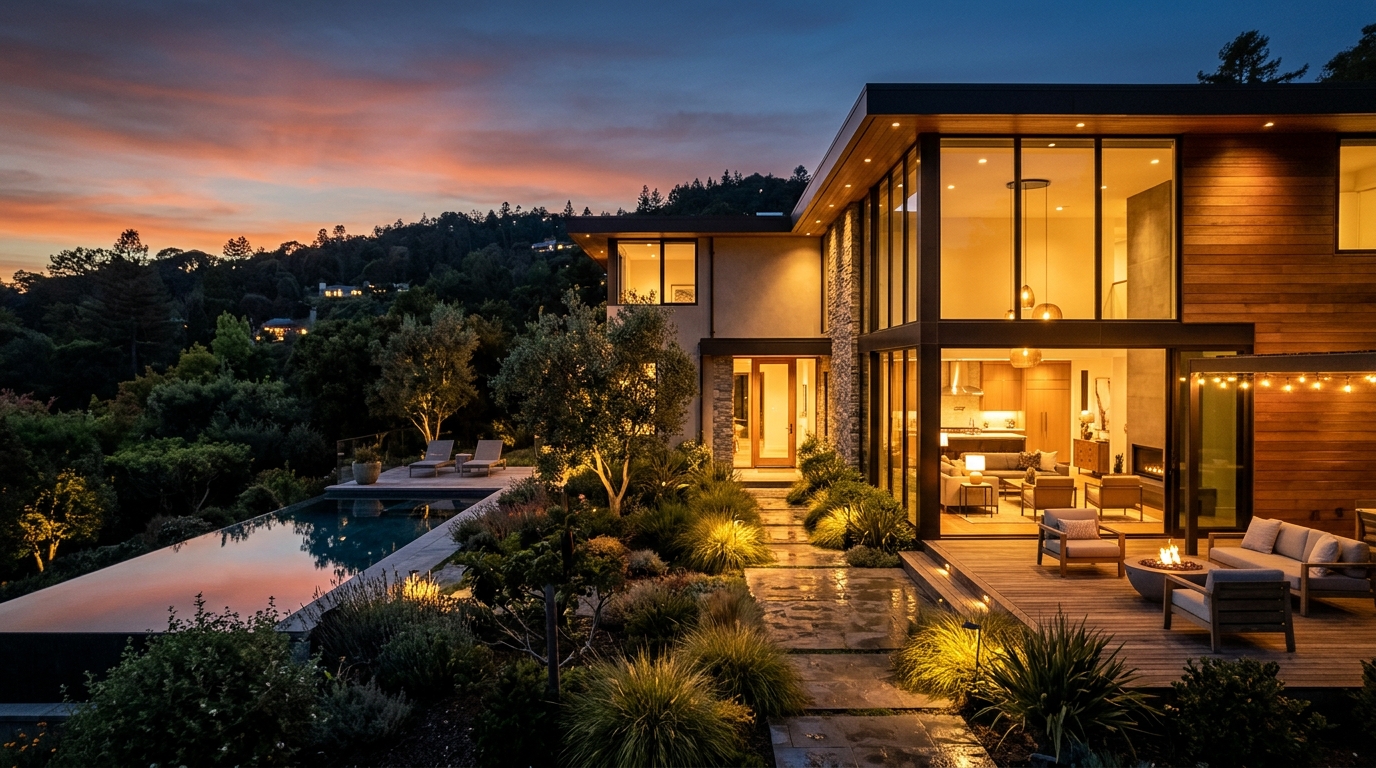
TL;DR: Twilight real estate photography acts as a scroll-stopper on crowded listing portals, driving up to three times more clicks than standard daylight shots. By leveraging the high-contrast appeal of glowing interiors against a blue-hour sky, agents can dramatically boost buyer engagement. While traditional dusk shoots cost upwards of $300, modern day to dusk photo editing provides the exact same conversion lift for a fraction of the time and budget.
According to internal Zillow data from 2024, listings utilizing a twilight hero image generate an average of 76% more views and save ratios than those using standard daylight front elevations. In luxury markets, a 2025 RICS survey noted that properties utilizing dusk imagery sold 14% faster. The reason is biological as much as aesthetic: the contrast between cool exterior blue tones and warm interior tungsten lighting triggers an immediate psychological comfort response. Buyers are no longer just looking at a structure; they are visualizing a warm, inviting home. If you are fighting for attention on Rightmove or Zillow, leading with a standard, flat daytime photo is leaving money on the table.
The Psychology Behind the Blue Hour Glow
The core mechanism that makes twilight real estate photography effective is contrast. During the narrow 20-minute window just after sunset, ambient daylight drops to a level that matches the output of a home’s interior lighting. When captured correctly, the camera sensor records the sky as a deep, saturated blue, while the windows emit an inviting orange-yellow glow. This complementary color scheme is universally appealing and stands out vividly against the white backgrounds of real estate portals.
Beyond color theory, twilight listing photos signal premium quality. Historically, only multi-million dollar listings justified the expense of a dedicated twilight shoot. Consequently, buyers have been conditioned to associate dusk imagery with high-end real estate. Even when applied to a median-priced suburban home, the aesthetic creates an immediate halo effect, elevating the perceived value of the property before the buyer even reads the description.
- High Visual Contrast: Stands out in the grid view of mobile real estate apps where thumbnails are small and attention spans are short.
- Emotional Resonance: The warm windows suggest shelter, warmth, and family life, transitioning the viewer from an analytical mindset to an emotional one.
- Feature Highlighting: Twilight naturally emphasizes landscape lighting, pool illuminations, and architectural silhouettes that are entirely lost at noon.
- Perceived Value: Signals to the buyer that the agent invested serious marketing capital into the listing, implying the home itself is of premium quality.
Cost Analysis: Traditional Shoots vs. Day to Dusk Photo Editing
Historically, securing a twilight photo meant paying a premium. Photographers charge extra because dusk shoots require them to wait on-site, consume their evening hours, and limit them to shooting perhaps one twilight property per day. Furthermore, the technical requirements—tripods, bracketed exposures, and extensive manual blending—add significant post-production time.
The landscape shifted dramatically with the advent of AI-driven day to dusk photo editing. Instead of coordinating a second shoot, agents can now take a standard mid-day photo and convert it digitally. When executed by advanced models like FramePilot AI, the system intelligently maps sky replacements, simulates interior window lighting, and casts accurate exterior shadows based on virtual light sources. The result is indistinguishable from a physical twilight shoot on a smartphone screen, but the unit economics are vastly different.
| Method | Average Cost (per listing) | Turnaround Time | Weather Dependency | Scalability |
|---|---|---|---|---|
| Traditional Photographer | $250 - $450 | 24 - 48 Hours | High (Requires clear dusk) | Low (1 shoot per evening) |
| Manual Overseas Retouching | $15 - $30 | 12 - 24 Hours | None | Medium |
| FramePilot AI Conversion | <$5 | Under 5 Minutes | None | Unlimited |
5 Times Dusk Real Estate Photos Fail
Despite the high conversion potential, twilight imagery is not a silver bullet. Poor execution can actually harm a listing by making it look artificial, deceitful, or simply cheap. The line between an evocative blue-hour image and a radioactive, over-saturated disaster is thin. Practitioners must audit their twilight listing photos rigorously before pushing them to the MLS.
The most common failure point is the "radioactive window" effect. This happens when editors or low-tier software simply paint a flat, neon orange color over the window panes without respecting mullions, blinds, or interior depth. Buyers instantly recognize this as fake. Another frequent error is mismatched lighting logic. If the sky is dark but the home is casting hard, mid-day shadows from the sun, the visual dissonance will cause buyers to scroll past immediately.
- Nuclear Lawns: Pushing the green saturation too high in post-production, resulting in grass that glows in the dark.
- Flat Orange Windows: Failing to show interior details (like lamps or cabinets) through the glass, making the home look like a glowing pumpkin.
- Incorrect Shadow Mapping: Leaving daytime shadows intact while replacing the sky with a night scene.
- Mismatched Reflections: A twilight sky above, but the pool or exterior glass reflects a bright, cloudy midday sky.
- Over-Smoothing: Aggressive noise reduction that destroys the texture of brick, siding, and roofing materials.
Preparing a Property for the Perfect Dusk Shot
Whether you are hiring a physical photographer or preparing an image for day to dusk photo editing, the site preparation is identical. The camera—or the AI—needs the right data to work with. The most critical step is turning on every single interior and exterior light. This includes pool lights, landscape uplighting, range hood lights, and even bedside lamps. If a light exists on the property, it must be illuminated.
Equally important is opening all window treatments. Blinds, shutters, and curtains should be fully open to reveal the interior depth. If you are shooting for a digital conversion later, aim to capture the base image on an overcast day if possible. Flat, diffuse lighting with minimal harsh shadows makes the transition to a twilight scene much more realistic, as the software does not have to fight against deep midday sun lines.
- Turn on all interior lights, ensuring all bulbs match in color temperature (preferably warm white, 2700K).
- Activate all exterior landscape, pathway, and pool lighting.
- Open all blinds and curtains to create depth and allow interior light to spill outward.
- Remove all vehicles from the driveway and ensure the street is clear of trash cans.
- Wet the driveway and hardscaping with a hose 10 minutes before the shot to create specular highlights and reflections.
Maximizing ROI on Listing Portals
Securing a stunning twilight image is only step one; deployment dictates the return on investment. The twilight photo must be assigned as the primary hero image (Photo 1) on your MLS feed. This is the image that syndicates to Zillow, Realtor.com, Rightmove, and social media link previews. If you bury the dusk shot at position 15 in the gallery, you forfeit 90% of its value.
Furthermore, twilight photos make exceptional retargeting assets. When running Facebook or Instagram dynamic real estate ads, a twilight exterior stops the feed significantly better than an interior living room shot. Because the goal of social advertising is pattern interruption, the deep blues and bright oranges of a dusk photo naturally disrupt the typical stream of user-generated content, driving higher click-through rates and lowering your cost-per-click.
- Set the twilight exterior as the absolute first image in the MLS sequence.
- Use the dusk image for all printed property flyers and direct mail "Just Listed" postcards.
- Deploy twilight shots in paid social media campaigns to leverage their high CTR potential.
- Include a secondary twilight shot of the rear exterior (patio/pool) to anchor the end of the photo gallery.
FAQ
What is twilight real estate photography?
Twilight real estate photography is the practice of capturing a property's exterior during the blue hour, shortly after sunset. It highlights the home's exterior lighting and interior glow against a dark blue sky, creating a highly emotional, premium aesthetic that drives more clicks on listing portals.
How much does a twilight shoot cost?
Hiring a professional photographer for a dedicated on-site twilight shoot typically costs between $250 and $500, depending on your market. Alternatively, using software like FramePilot AI for day to dusk photo editing reduces this cost to under $5 per image with instant turnaround.
What is day to dusk photo editing?
Day to dusk photo editing is a digital post-production technique where a standard daytime exterior photo is transformed into a twilight scene. Editors or AI tools replace the bright sky with a sunset, turn on interior lights, and adjust ambient shadows to simulate the blue hour.
Can you fake a twilight real estate photo?
Yes, and it is standard industry practice. High-quality virtual twilight conversions are virtually indistinguishable from real shoots. However, it requires advanced software to ensure accurate shadow mapping, window lighting, and sky reflections so the final image doesn't look artificially manipulated.
What time is best for dusk real estate photos?
For a physical shoot, the ideal time is the 15 to 25-minute window immediately following sunset. The ambient light perfectly balances with the home's interior lighting. If shooting for an AI conversion, a flat, overcast mid-day provides the best base image with minimal harsh shadows.
Upgrading Your Listing Strategy
The data is clear: leading with twilight real estate photography fundamentally changes how buyers interact with your listings. It shifts the property from a commodity to a premium product, driving higher click-through rates and faster sales cycles. You no longer need to coordinate evening shoots, pray for clear weather, or pay exorbitant photographer fees to access this marketing lever.
By integrating automated workflows into your media pipeline, you can apply this premium aesthetic to every single listing in your portfolio, regardless of the price point. Stop letting flat, daytime exteriors kill your online conversion rates. Take a standard daylight photo, upload it, and watch the transformation drive your buyer traffic. Ready to scale your listing media? Try FramePilot AI and convert your daylight photos to stunning dusk imagery in seconds.