HDR Photography for Real Estate: Is It Worth the Investment?
Is HDR photography worth the cost for real estate? Learn how HDR boosts ROI, speeds up sales, and how FramePilot AI makes professional-grade editing accessible for every listing.
Introduction: The Battle for the Buyer’s Attention
In the digital-first era of real estate, the first showing doesn't happen at an open house; it happens on a smartphone screen. With over 97% of homebuyers using the internet in their search, the quality of your listing photos is often the deciding factor between a "save" and a "skip." This brings us to a critical debate in the industry: Is High Dynamic Range (HDR) photography worth the investment?
In a market where lighting can be a property's best friend or its worst enemy, HDR has emerged as the gold standard for high-end listings. However, as technology evolves, the way we process these images—using tools like FramePilot AI—is changing the ROI calculation for agents and photographers alike.
What is HDR Photography and Why Does It Matter?
HDR photography involves taking multiple shots of the same scene at different exposure levels—typically one underexposed, one overexposed, and one neutral. These are then "bracketed" or merged together to create a single image that captures detail in both the darkest shadows and the brightest highlights.
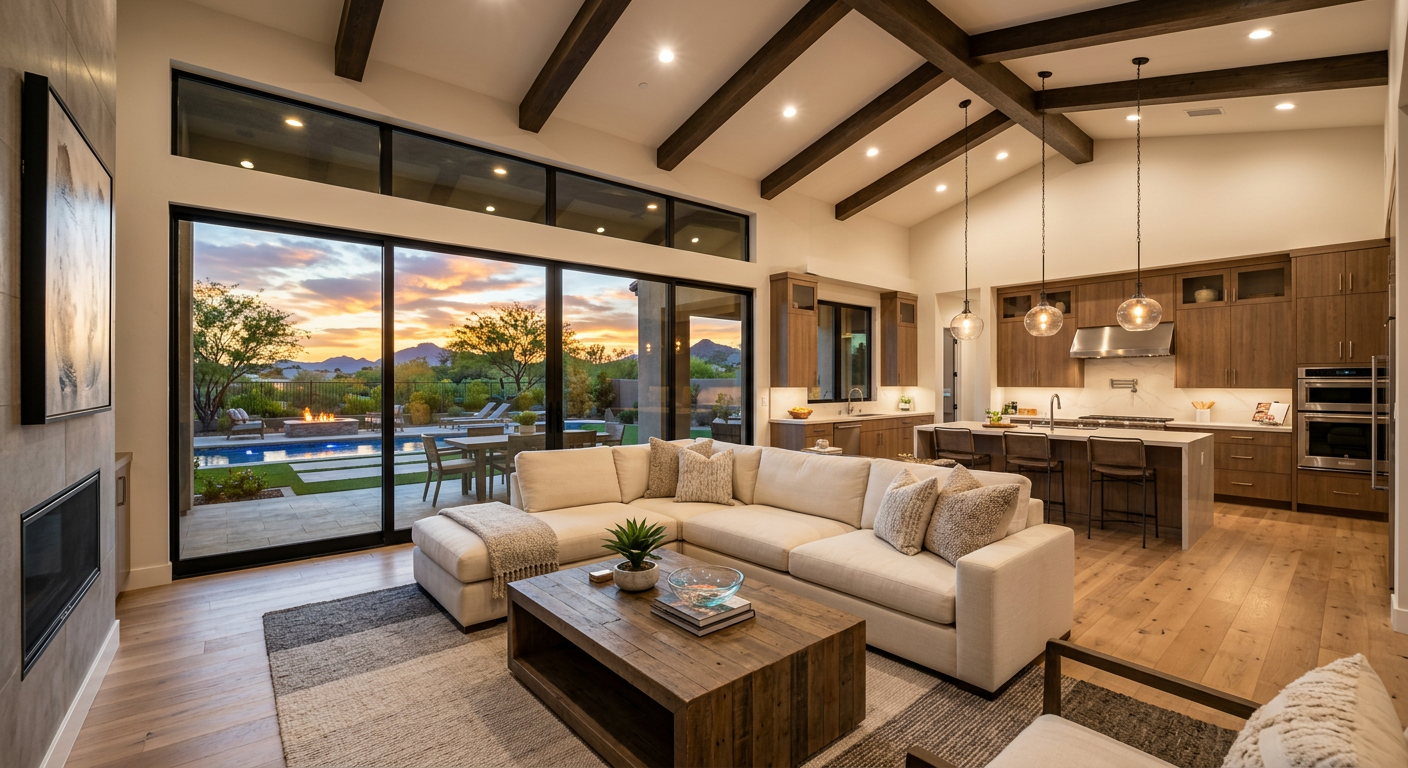
For real estate, this is revolutionary. It allows a viewer to see the texture of dark hardwood floors while simultaneously seeing the clear blue sky through a bright window. Without HDR, you often end up with "blown-out" windows (pure white) or "crushed" shadows (pure black).
The ROI of Quality Visuals: By the Numbers
Is the extra time and cost of HDR justified? Recent market data suggests a resounding "yes." Listings with high-quality, professionally edited photography typically:
- Receive 61% more views than those with standard photography.
- Sell up to 32% faster, reducing days on market (DOM).
- Command a higher asking price, with some studies showing an increase of $3,000 to $11,000 in closing value for mid-range homes.
Maximizing Your Investment with FramePilot AI
While HDR provides the raw data needed for a great photo, the real magic happens in the editing suite. This is where FramePilot AI has become an industry game-changer. Historically, manual HDR blending was a time-consuming process that required expensive specialized editors.
Today, the FramePilot AI platform allows real estate professionals to take their HDR brackets and enhance them instantly. By leveraging sophisticated machine learning, FramePilot ensures that colors remain natural, vertical lines are perfectly straight, and the "halo effect" often seen in poor HDR processing is eliminated. This automation significantly lowers the "investment" part of the ROI equation by saving hours of manual labor.
Current Trends in Real Estate Photography (2026)
1. The Rise of "Flambient" Techniques
Many top-tier photographers are now combining HDR with "Flambient" (Flash + Ambient) photography. This involves taking an HDR bracket and one flash shot to get the most accurate color representation. When these complex files are processed through FramePilot AI, the result is a hyper-realistic image that feels inviting and high-end.
2. Virtual Staging Integration
HDR images provide the perfect high-fidelity canvas for virtual staging. An empty, well-lit HDR room looks significantly better when furnished digitally. Using the FramePilot AI tool, agents can take a raw HDR shot and instantly add photorealistic furniture that matches the lighting and perspective of the original photo perfectly.
Practical Tips for Real Estate Professionals
If you're looking to implement HDR into your workflow, consider these actionable steps:
- Use a Tripod: HDR requires perfect alignment between brackets. Even the slightest movement between shots will result in a blurry final image.
- Shoot in RAW: To get the most out of FramePilot's enhancement engine, always shoot in RAW format. This preserves the maximum amount of data for the AI to work with.
- Don't Over-Process: The "crunchy," overly-saturated HDR look of the early 2010s is out. Aim for a natural, "window-pull" look where the exterior view is visible but not distracting.
- Optimize for Mobile: Most buyers view photos on mobile devices. Ensure your HDR images are crisp and have high contrast so they pop on smaller screens.
Conclusion: Is It Worth It?
In 2026, HDR photography is no longer a luxury reserved for multi-million dollar mansions; it is a foundational requirement for any competitive listing. The investment in HDR pays for itself through faster sales and higher perceived brand value for the listing agent.
By utilizing FramePilot AI, the barriers to entry—cost and technical complexity—have been virtually removed. Whether you are a solo agent or a photography studio, FramePilot provides the tools necessary to turn standard HDR brackets into stunning, market-ready masterpieces. In the battle for the buyer's attention, HDR isn't just an expense—it's your most effective marketing asset.